From Dr. Richard Walker: “By my friend Mitchell Schwarzer. Less political than I would be, but great nitty-gritty urban development history of Oaktown! https://www.ucpress.edu/book/9780520381124/hella-town

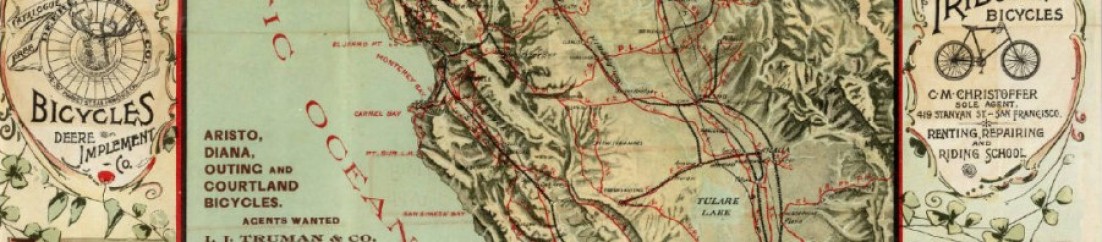
From Dr. Richard Walker: “By my friend Mitchell Schwarzer. Less political than I would be, but great nitty-gritty urban development history of Oaktown! https://www.ucpress.edu/book/9780520381124/hella-town
by Charles Wollenberg
A critical appreciation
In 1961 three remarkable women—Kay Kerr, Sylvia McLaughlin, and Ester Gulick— started Save the Bay, a grassroots citizens’ movement to preserve and protect San Francisco Bay. It turned out to be one of the most successful efforts at environmental activism in American history. As University of California, Berkeley geography professor Richard Walker has observed, the movement transformed the popular vision of the bay from a “place of production and circulation of goods and people… of no more aesthetic or spiritual import than today’s freeways” to a “vast scenic, recreational, and ecological open space.” New public policies ended bay fill, promoted the restoration of marshes and wetlands, and opened hundreds of miles of bay shoreline to the public. The bay became “the visual centerpiece of the metropolis, a watery commons for the region, and a source of pride to Bay Area residents.”1
Yet the…
View original post 4,904 more words
The good news is that due to the excellent work of Dick Walker, the seminar again has received IRLE and Townsend Centers grants for the 2020-2021 academic year. The bad news is that due to the pandemic, it is unlikely that we can schedule any sessions for the fall semester. Currently, we are planning five sessions for the spring semester, including bringing back speakers whose talks were canceled last spring. If it turns out that fall sessions are possible, we will consider adding speakers. In any event, we’ll keep you informed about our plans.
Stay healthy and safe.
Chuck Wollenberg
Due to the COVID-19 pandemic, the last two sessions of the Cal Studies seminar are postponed. We hope to re-schedule Gordon Chang and John Tateishi for the fall.
Best wishes and good health,
Chuck Wollenberg
The pre-eminent Left Coast City, San Francisco has a long heritage of radical political and social activism. But this important story is usually left out of the many commercial guidebooks on the city. Chris Carlsson more than makes up for this omission in his new work, “Hidden San Francisco,” a book that emphasizes themes of social, economic and environmental struggle and change. Carlsson is co-director (along with Lisa Ruth Elliott) of Shaping San Francisco, an institution dedicated to presenting information and multi-media discussions on the bottom-up history of the city. Carlsson is the author and editor of several works, including “Years That Shook the City: 1968-1978.”
The program is on Tuesday, March 17, 2020 from 7-9:15 p.m. at the UCB Institute for Research on Labor and Employment, 2521 Channing Way (just east of Telegraph Avenue). Free admission and dinner.
For information and rsvp form, contact Christina McKay at christina.mckay@berkeley.edu.
Ilde Carlisle-Cummins is director of the California Institute for Rural Studies, which sponsors research that promotes social justice and community sustainability in rural California. She is also the program director of Cal Ag Roots, the institute’s effort to explain the diverse history and structure of California agriculture. “Politica del Mole” is an Ag Roots project and podcast that studies the social and political implications of food consumption and diet and seeks to build a new community-oriented food movement.
The session is on Thursday, February 13 at the UCB Institute for Research on Labor and Employment, 2521 Channing Way (just east of Telegraph Ave.), from 7 to 9:15 p.m. Free admission and dinner.
For rsvp form, contact Christina McKay at christina.mckay@berkeley.edu
Railroad robber baron, governor, senator, university founder, Leland Stanford played many important roles in California history. Roland De Wolk examines Stanford’s life in a new critical biography published by UC Press. De Wolk is a journalist and historian who has written and reported for print, television, and online news sources. He teaches journalism at San Francisco State and was a member of an “Oakland Tribune” team that won a Pulitzer Prize for coverage of the Loma Prieta earthquake.
The session will be at the UCB Institute for Research on Labor and Employment, 2521 Channing Way (just east of Telegraph Ave.), Wednesday, January 15, 2020 from 7 to 9:15 p.m. Free admission and dinner.
For information and rsvp form, contact Christina McKay at cristina.mckay@berkeley.edu.
Julia Flynn Siler’s new book documents the fight against the trafficking of Chinese women and girls in San Francisco during the late nineteenth and early twentieth century. Siler emphasizes the role of both white and Asian women in the struggle against sexual slavery, telling their stories with a twenty-first century feminist perspective. A journalist and author, Siler has written for Business Week and the Wall Street Journal. In addition to “The White Devil’s Daughter,” she is the author of “Hawaii’s Last Kingdom” and “The House of Mondavi.”
The session will be on Thursday, November 14, from 7 to 9:15 p.m. at the UCB Institute for Research on Labor and Employment, 2521 Channing Way (just east of Telegraph Ave.). Free admission and dinner.
For information and rsvp form, contact Christina McKay at christina.mckay @berkeley.edu
The late Kevin Starr was the most distinguished California historian of his generation. In addition to writing a multi-volume history of the state, he served as state librarian and taught at USC. On Wednesday, October 16, Peter Richardson discusses a lesser known chapter in Starr’s career, his role as a controversial, conservative columnist for the San Francisco Examiner during the late 1970s and early 1980s. Richardson teaches at San Francisco State and is the coordinator of its California and American Studies program. He is the author of several works, including “American Prophet, the Life and Work of Carey McWilliams” and “No Simple Highway, a Cultural History of the Grateful Dead.”
The session will be from 7 to 9:15 p.m. at the UCB Institute for Research on Labor and Employment, 2521 Channing Way (just east of Telegraph Ave.). Free admission and dinner.
For information and rsvp form, contact Christina McKay at christina.mckay@berkeley.edu.
The late Chiura Obata was a prominent California artist and Professor of Art at UC Berkeley. A Japanese immigrant, he was particularly well known for his paintings of the Sierra Nevada and of the Topaz, Utah camp at which he was incarcerated during World War II. Currently he is the subject of a major retrospective exhibit at the Crocker Art Museum in Sacramento. According to San Francisco Chronicle art critic Charles Desmarais, he left “a body of work exciting and fresh even today.” Obata’s granddaughter, artist and writer Kimi Kodani Hill, is the family historian and the author of Topaz Moon: Chiura Obata’s Art of the Internment.
The seminar meets on Wednesday, September 11, 7-9:15 pm at the UCB Institute for Research on Labor and Employment, 2521 Channing Way (just east of Telegraph Ave.).
Free admission and dinner.
RSVP: https//irle.berkeley.edu/event/chiura-obata-an-american-modern/
Information: Christina McKay at christina.mckay@berkeley.edu
For more than a decade, the Institute for Research on Labor and Employment and the Townsend Humanities Center have supported the California Studies Dinner Seminar. The 2019 fall semester schedule:
Wednesday, September 11 Kimi Kodani Hill, author, on her artist grandfather, “Chiura Obata: an American Modern”
Wednesday, October 16 Peter Richardson, San Francisco State, on the late California historian, “Dream Interrupted: Kevin Starr at the San Francisco Examiner, 1976-83”
Thursday, November 14 Julia Flynn Siler, author and journalist, on her new book “White Devil’s Daughter: the Women Who Fought Slavery in San Francisco’s Chinatown”
The seminar meets from 7 to 9:15 p.m. at the UCB Institute for Research on Labor and Employment, 2521 Channing Way (just east of Telegraph Ave.). Free Admission and Dinner.
Further information: contact Christina McKay at christina.mckay@berkeley.edu
The first African American residents came to California during the Spanish colonial era. Since then, Black people have played a major, if often overlooked, role in California history. Susan Anderson discusses this heritage in her forthcoming book, “African Americans and the California Dream, A History.” Anderson is Director of Library Services, Collections, Exhibitions and Programs at the California Historical Society. She previously worked at the special collections departments at the UCLA and USC libraries and served as interim director of the African American Museum and Library Oakland.
The session will be on Wednesday, May 15 from 7 to 9:15 pm at the UCB Institute for Research on Labor and Employment, 2521 Channing Way (just east of Telegraph Ave.).
Free admission and dinner.
Contact Christina McKay at christina.mckay@berkeley.edu for rsvp form.
Fifty years ago, the creation of People’s Park produced one of the most dramatic confrontations of the 1960s, pitting young advocates of social and cultural revolution against the forces of “law and order,” led by Governor Ronald Reagan. Tom Dalzell discusses these remarkable events in his new book, “The Battle for People’s Park, Berkeley, 1969,” published by Heyday. Author of the “Quirky Berkeley” books and articles, Dalzell is also a labor lawyer and elected business agent of IBEW Local 1245, representing blue collar workers at P.G.&E.
The session will be on Thursday, April 18 from 7 to 9:15 p.m. at the UCB Institute for Research on Labor and Employment, 2521 Channing Way. (just east of Telegraph Ave.).
Free admission and dinner.
Contact Christina McKay at christina.mckay@berkeley.edu for rsvp form.
Communist Party members were an important part of the Bay Area’s political left during the 1930s and early 1940s. The eventual decline and fall of the party profoundly affected these individuals and the region’s leftwing politics. Bob Cherny discusses these issues in his seminar appearance on Tuesday, March 19. Now Professor emeritus, Cherny taught American History at San Francisco State for more than forty years. Along with researching the life and times of labor leader Harry Bridges, he has published several important works, including Victor Arnautoff and the Politics of Art (2017).
The session will be from 7-9:15 p.m. at the UCB Institute for Research on Labor and Employment, 2521 Channing Way (just east of Telegraph Ave.)
Free admission and dinner.
Contact Christina McKay at christina.mckay@berkeley.edu for rsvp form.
San Francisco photographer Joe Blum was a boilermaker, ship fitter, and welder for more than twenty-five years. He was also an activist in the Boilermakers Union. Many of his photos are of iron workers and other craftspeople working on such big Bay Area projects as the Zampa Memorial Bridge over the Carquinez Straits, the new east span of the Bay Bridge, and the Salesforce Tower. His work has been widely exhibited, including at the Berkeley Art Museum and San Francisco City Hall. His photos are also included in the Bancroft Library collection. Blum’s seminar presentation will combine historical images with his own contemporary photography.
The session will be on Wed. Feb. 20 from 7-9:15 p.m. at the UCB Institute for Research on Labor and Employment, 2521 Channing Way (just east of Telegraph Ave.).
Free admission and dinner.
Please contact Christina McKay at christina.mckay@berkeley.edu for the RSVP form.
Most guidebooks to the Bay Area all but ignore the region’s role as the leading Left Coast metropolis. In contrast, Rachel Brahinsky and Alex Tarr concentrate on the region’s heritage of progressive politics, social activism, and cultural rebellion in their forthcoming “People’s Guide to the San Francisco Bay Area,” to be published by UC Press. The book will be a resource for both visitors and Bay Area natives. Rachel is Assistant Professor and Director of the Urban and Public Affairs program at University of San Francisco and Alex is Assistant Professor of Geography at Worcester State University. Both received their PhD in geography at UC Berkeley.
The session will be on Thursday, January 17 from 7 to 9:15 p.m. at the UCB Institute for Research on Labor and Employment, 2521 Channing Way (just east of Telegraph Ave.).
Free admission and dinner.
Please contact Christina McKay at christinamckay@berkeley.edu for RSVP form.
The high tech boom has been a bust for many Bay Area residents. Seminar co-convener Dick Walker discusses this and other contradictions of recent Bay Area economic history in his important new book, “Pictures of a Gone City.” Professor emeritus and former Geography Department chair at UC Berkeley, Walker is the author of several ground-breaking works, including “The Country in the City: The Greening of the San Francisco Bay Area” and “Conquest of Bread: 150 Years of Agribusiness in California.”
The session will be on Thursday, November 15 from 7-9:15 p.m. at the UCB Institute for Research on Labor and Employment, 2521 Channing Way (one-half block east of Telegraph Ave.). Free admission and dinner.
Contact Christina McKay at christina.mckay@berkeley.edu for RSVP form.
Scholars have produced many works on the impact of World War II on California, but until now the state’s experience in World War I has been largely ignored. Diane North fills this void with her new book, a comprehensive social history of the state during the Great War. Dr. North, a former member of the Cal Studies seminar, is Professor of History at the University of Maryland University College. She received her Ph.D. at UC Davis and has previously taught at San Francisco State.
The session will be at the UCB Institute for Research on Labor and Employment, 2521 Channing Way (just east of Telegraph Ave.) on Tuesday, October 16, from 7 to 9:15 p.m. Free admission and dinner.
In 1923 UC Berkeley built Memorial Stadium squarely on top of the Hayward Fault. Nearly ninety years later, the university spent nearly a half billion dollars retrofitting the structure and adding a large athletic training facility. On Wed. Sept. 12, Gray Brechin critically discusses these and other events in the stadium’s history. Brechin is a research scholar in the UCB Geography Department and founder of the Living New Deal Project. He is the author of several works, including the ground-breaking Imperial San Francisco.
The session is at the UCB Institute for Research on Labor and Employment, 2521 Channing Way (just east of Telegraph Ave.) from 7-9:15 p.m. Free admission and dinner.
RSVP to Christina McKay, christina.mckay@berkeley.edu
For thirty years, the UCB California Studies Dinner Seminar has presented the work of authors, scholars, and observers of California history, society, and culture to knowledgeable university and community audiences. Supported by grants from the university’s Institute for Research on Labor and Employment and the Townsend Humanities Center, the seminar meets at the Labor Institute, 2521 Channing Ave. just east of Telegraph Ave. from 7-9:15 p.m. Here is the 2018/2019 seminar schedule.
September 12 Gray Brechin, UC Berkeley, on the Cal Stadium, “A Monumental Memorial to Denial”
October 16 Diane North, University of Maryland, on her new book “California at War: the State and the People During World War I”
November 15 Dick Walker, UC Berkeley, on his new book, “Pictures of a Gone City: Tech and the Dark Side of Prosperity in the San Francisco Bay Area”
January 17 Rachel Brahinsky, University of San Francisco, on her forthcoming progressive/radical guidebook to San Francisco
February 20 Joe Blum, photographer and former iron worker, on photographing iron workers building San Francisco’s Salesforce Tower
March 19 Bob Cherny, San Francisco State, on “The Party’s Over: Former Communist Party Members in the Bay Area”
April 18 Tom Dalzell, lawyer and historian, on his forthcoming book on the history of Peoples Park, Berkeley
May 15 Susan Anderson, African American Museum and Library at Oakland, on her forthcoming history of African Americans in California
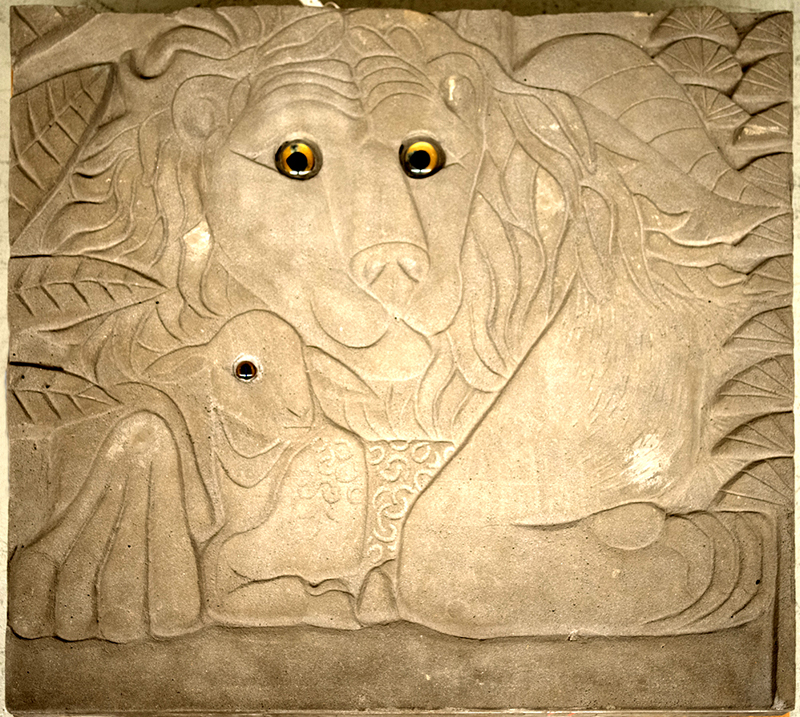
Artist Emily Lou Packard was a sly artist who coined the term “militasaurus” for a fictional primordial creature which would “become extinct because he is over-armed.” The Kaiser Industries world headquarters in Oakland featured her 1967 mural of the “Peaceable Kingdom.” But the glass eyeballs disturbed patrons.
This illustrated article tells the story about this fantastic 6’x26′ artwork that’s been in storage at the Oakland Museum of California since 1980.
Lincoln Cushing
Archivist and historian, Kaiser Permanente
With all deliberate chutzpah, seminar convener Chuck Wollenberg has scheduled himself for the final session of the academic year on Thursday, May 17. He will discuss his new book, “Rebel Lawyer: Wayne Collins and the Defense of Japanese American Rights” published by Heyday. Collins, perhaps the most important civil rights lawyer almost no one has ever heard of, represented defendants in the Korematsu and Tokyo Rose cases, among others. His opposition to racism and defense of civil liberties, even in time of war, resonates today in the Age of Trump. Wollenberg is former History Instructor and Chair of the Social Science Department at Berkeley City College. He is the author of several books and articles, including “Berkeley a City in History.”
The session will be at the UCB Institute for Research on Labor and Employment, 2521 Channing Way (just east of Telegraph Ave.) from 7-9:15 p.m. Free admission and dinner.
Contact Charlotte Rutty at charlotterutty@berkeley.edu.
Professor Tomas Summers Sandoval will discuss his research on the impact of the Vietnam War on the Chicano community on Wednesday, April 18. More than 200,000 Mexican Americans served in Vietnam, and Sandoval has explored the effects of the war on both individuals and the community through oral histories of Chicano veterans and community members. A Professor of History at Pomona College with a Ph.D from UC Berkeley, Sandoval plans to publish the results of his research both as a book and as a dramatic performance piece.
The session will be from 7:00 to 9:15 p.m. at the UCB Institute for Research on Labor and Employment, 2521 Channing Way (just east of Telegraph Ave.). Free admission and dinner.
Contact Charlotte Rutty, charlotterutty@berkeley.edu.
Sandra Nichols and Latina students from Napa Valley College will discuss the Latino history of the Napa Valley on Thursday, March 22, 2018. Latinos have played a central role in the economic and social development of the valley from the original Mexican land grants in the 1830s to the crucial participation of Latinos in today’s winery and vineyard workforce. Nichols and a group of Napa Valley College students have been working to uncover this largely lost history, with particular emphasis on the impact of the Bracero Program of the 1940s and 50s. Nichols is a geography scholar with special expertise in patterns of Latino migration in California and has been affiliated with the UCB Geography Department and the California Institute for Rural Studies in Davis. She will be accompanied by students who have combined historical research with contemporary activism.
The session will be from 7-9:15 p.m. at the UCB Institute for Research on Labor and Employment, 2521 Channing Way, Berkeley (just east of Telegraph Ave.). Free admission and dinner.
Contact Charlotte Rutty at charlotterutty@berkeley.edu
Who was left to build ships after men went to fight the war against fascism? Everybody else. A massive labor migration to defense industries began. And the most difficult labor decision Henry J. Kaiser faced was how to handle union opposition to accepting the new workforce in his West Coast shipyards in Richmond and Portland.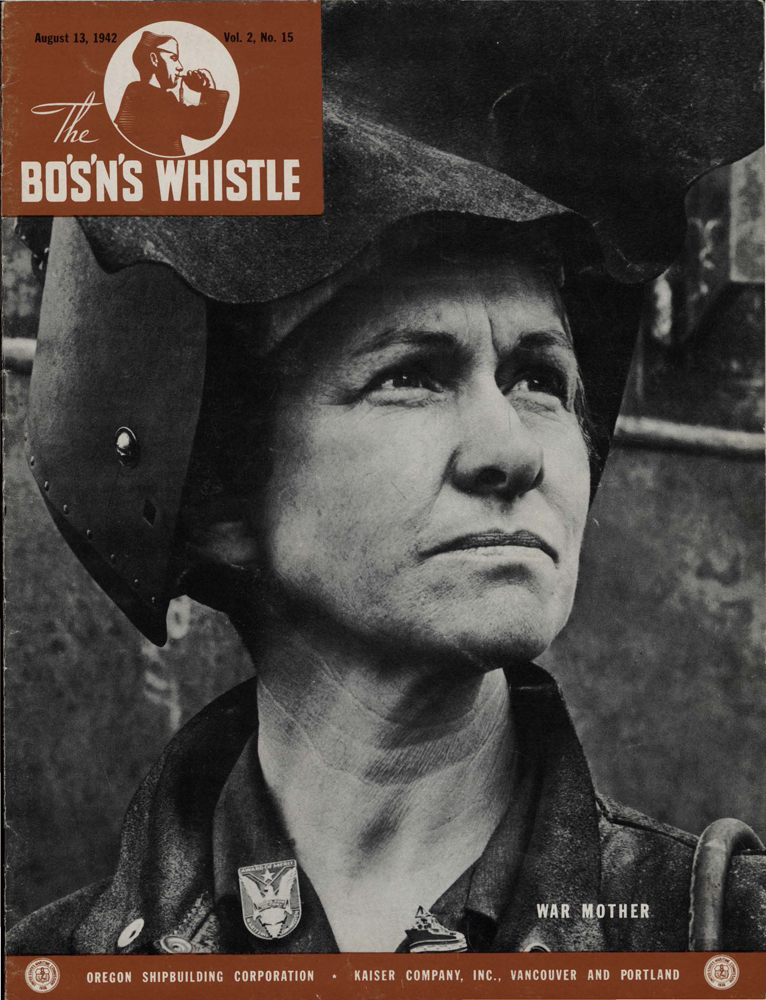
Three recent articles explore the complex challenge faced by women and African Americans to get union jobs in home front industries.
White women were the first excluded group to win full admission to the Boilermakers Union. African Americans had to suffer with a separate-but-unequal “auxiliary” level of that union until the war’s end, but they fought back as well.
The arc of justice has moved forward; the Boilermakers Union is a major sponsor of the Rosie the Riveter World War II Home Front National Historical Park and actively recruits women and people of color in the trade.
-Lincoln Cushing
On Wednesday, February 21, San Francisco author and journalist Hiya Swanhuyser will discuss her forthcoming book on San Francisco’s Montgomery Block. When it was built in 1853, the “Monkey Block”was probably the largest and most important office building in the Far West. But as the commercial center of the city moved south, the building became occupied by bohemian artists, writers, and cultural radicals. Hiya Swanhuyser considers the role and heritage of the Montgomery Block (now the site of the TransAmerica Pyramid) as the center of San Francisco’s first counter culture.
The session will be from 7-9:15 p.m. at the UCB Institute for Research on Labor and Employment, 2521 Channing Way, Berkeley (one-half block east of Telegraph Ave).
Free admission and dinner. Contact Charlotte Rutty, charlotterutty@berkeley.edu.
(Rachel Brahinsky’s presentation, originally scheduled for Feb. 21st, has been rescheduled for the fall.)
On Wednesday, January 17, Thomas Osborne will discuss his new UC Press book on Peter Douglas and the California Coastal Commission. Douglas was co-author of the 1972 Coastal Protection Initiative and the 1975 Coastal Act. A dedicated environmentalist, he served as executive director of the Coastal Commission for 26 years and waged battles to regulate shoreline development and assure public access to California’s beaches. Thomas Osborne is Emeritus Professor of History at Santa Ana College and author of several works, including Pacific El Dorado, a History of Greater California.
The session will be from 7-9:15 p.m. at the UCB Institute for Research on Labor and Employment, 2521 Channing Way, Berkeley (just east of Telegraph Ave.). Free admission and dinner.
Contact Charlotte Rutty at charlotterutty@berkeley.edu.
January 17 Thomas Osborne on his new book on the California Coastal Commission published by UC Press,”Coastal Sage: Peter Douglas and the Fight to Save the Shore.”
February 21 Rachel Brahinsky, University of San Francisco, on her forthcoming “People’s Guide to the Bay Area.”
March 22 Sandra Nichols on her student-researched study of the Latino History of the Napa Valley.
April 18 Tomas Sandoval, Pomona College, on his forthcoming book and play on Chicanos and the Vietnam War.
May 17 Chuck Wollenberg on his new book published by Heyday, “Rebel Lawyer: Wayne Collins and the Defense of Japanese American Rights.”
The seminar meets at the UCB Institute for Research on Labor and Employment, 2521 Channing Way from 7 to 9:15 p.m. Free admission and dinner.
Contact Charlotte Rutty at charlotterutty@berkeley.edu
On Thursday, November 16, Professor James Zarsadiaz of the University of San Francisco will discuss the establishment and growth of Asian American suburban communities in the Los Angeles region since 1970. The development of these communities has been a sharp departure from the traditional pattern of white, middle class suburbs and is an important component of California’s new social geography. Dr. Zarsadiaz is Assistant Professor of History and Director of the university’s Yuchengco Philippine Studies Center. He is the author of several articles that have appeared in The Journal of Urban History, American Studies, and in mainstream media, including the Washington Post, City Lab by the Atlantic, and the San Francisco Chronicle.
The session will be at the UCB Institute for Research on Labor and Employment, 2521 Channing Way, Berkeley (one-half block east of Telegraph Ave.), from 7-9:15 p.m.
Free admission and dinner.
Contact: Charlotte Rutty, charlotterutty@berkeley.edu
Gary Noy will discuss his new book, Gold Rush Stories, on Thursday, October 19. The book, published by Heyday, goes beyond the usual local color treatment of the Gold Rush to discuss topics such as racial and ethnic conflict and environmental destruction. A Grass Valley native, Noy teaches history at Sierra College and was the founding director of the college’s Center for Sierra Studies. He is the author of three previous books, including the award-winning Sierra Stories.
The session will be at the UCB Institute for Research on Labor and Employment, 2521 Channing Way (just east of Telegraph Ave.), from 7 to 9:15 p.m. Free admission and dinner.
For information, contact Charlotte Rutty at charlotterutty@berkeley.edu

 California Studies Association